Let’s talk about the financial phenomenon that has everyone—from the U.S. Senate to JD.com—racing to get involved: stablecoins. What started as a crypto curiosity has become a global financial battleground, and understanding why requires looking beyond the surface-level hype.
What Exactly Are Stablecoins?
Stablecoins are cryptocurrencies designed to maintain a stable value, typically pegged 1:1 to the U.S. dollar. Unlike volatile cryptocurrencies like Bitcoin, stablecoins achieve stability through collateralization—each coin issued is backed by real assets, usually U.S. dollars or short-term Treasury bonds.
The mechanics are straightforward: you give a stablecoin issuer (like Tether or Circle) one dollar, and they create a digital token worth one dollar on the blockchain. This token can then be used for payments, trading, or investments across the crypto ecosystem. The issuer maintains the peg by ensuring they can always redeem tokens at face value, creating automatic market arbitrage that keeps prices stable.
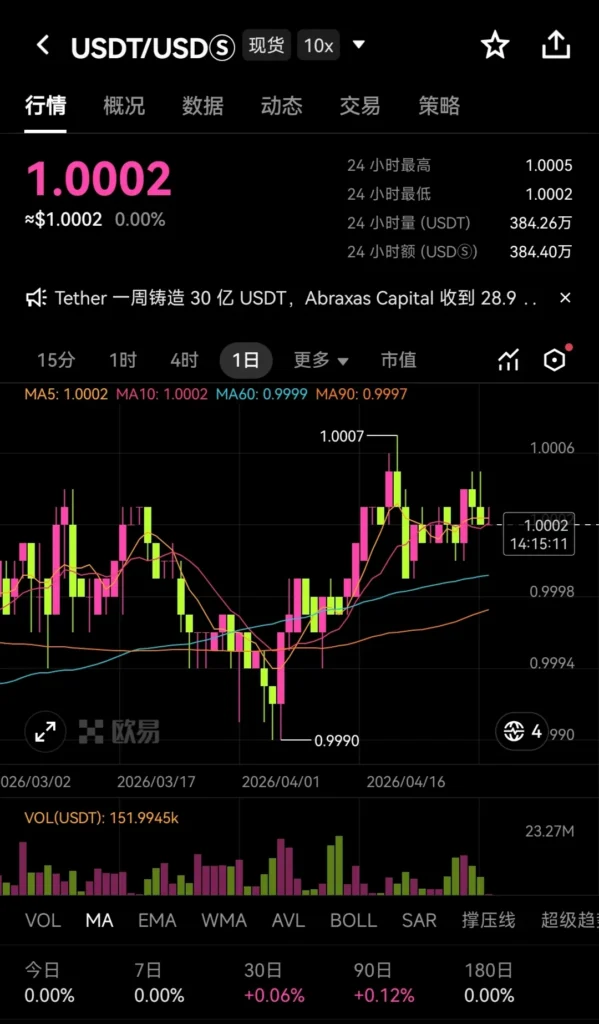
Currently, the stablecoin market is dominated by two players:
- Tether (USDT): ~60% market share, $143+ billion in circulation
- USD Coin (USDC): ~24% market share, issued by Circle (recently public with 750% stock surge)
The Explosive Growth No One Saw Coming
While Bitcoin grabs headlines, stablecoins have quietly built massive real-world utility:
Transaction Volume Dominance
In 2024, stablecoins processed $27.6 trillion in transactions—surpassing the combined payment volume of Visa and Mastercard. This demonstrates their evolution from speculative assets to genuine transactional currency.
Cross-Border Payment Revolution
Traditional cross-border remittances average 5%+ fees and take days to process. Stablecoins eliminate these barriers:
- Near-zero transaction fees
- Settlement in minutes, not days
- No currency conversion or SWIFT network required
- Monthly cross-border stablecoin volume has exploded from near-zero to $50 billion in just 18 months
Inflation Hedge for Emerging Markets
In countries suffering from currency devaluation (Argentina, Nigeria, Turkey, Brazil), citizens are increasingly using stablecoins as digital dollar alternatives. Initially met with government resistance, many of these same governments have now embraced stablecoins as preferable to black market dollar trading.
The Global Regulatory Race
What’s truly remarkable is the synchronized global regulatory response in 2024:
United States – The GENIUS Act
In May 2024, the U.S. Senate passed the “GENIUS Act” (Guaranteed Electronic Net Instruments Uniform Standards), establishing:
- Mandatory licensing for stablecoin issuers
- 100% reserve requirements in high-quality assets (Treasury bonds, overnight repos)
- Priority repayment rights for stablecoin holders in bankruptcy scenarios
- Comprehensive anti-money laundering and disclosure requirements
Hong Kong – Dual-Track Approach
Hong Kong launched its Stablecoin Bill in May 2024 (effective August 1), featuring:
- Regulatory “sandbox” approach with controlled pilot programs
- Initial licenses granted to JD Coin Chain, Yuancoin Innovation, and Standard Chartered alliance
- Focus on both Hong Kong dollar stablecoins and offshore RMB stablecoins
- Integration with Cross-border Payment Pass linking mainland China and Hong Kong
European Union – Cautious Embrace
The EU’s MiCA (Markets in Crypto-Assets) regulation takes a more restrictive approach:
- Prohibits stablecoin interest payments (unlike current market practices)
- Bans redemption fees
- Imposes strict daily trading volume limits
- Reflects European concerns about monetary sovereignty and financial stability
Global Momentum
Singapore, South Korea, the UK, and the UAE have all introduced stablecoin regulatory frameworks in 2024, creating a worldwide race to establish jurisdictional advantage in this emerging market.
Why Everyone Suddenly Cares
The rush to embrace stablecoins stems from three interconnected motivations:
1. Dollar Dominance Strategy (U.S. Perspective)
U.S. Treasury Secretary Bessent explicitly stated that stablecoins serve to “maintain the dominance of the U.S. dollar.” With 99% of stablecoins pegged to the dollar, widespread adoption effectively extends dollar usage into countries experiencing de-dollarization pressures.
2. Treasury Bond Demand Creation
Stablecoin reserves are heavily invested in short-term U.S. Treasury bonds. Tether alone purchased $33.1 billion in Treasuries in 2024, becoming the world’s seventh-largest buyer. Projected stablecoin growth could create $1 trillion+ in additional Treasury demand by 2028.
3. Crypto World Leadership
Rather than fighting cryptocurrency innovation, major powers recognize that regulation and participation offer better strategic positioning than prohibition. As one analyst noted: “It’s the global version of ‘if you can’t beat them, join them.'”
Corporate Stampede Into Stablecoins
The corporate adoption wave reveals stablecoins’ mainstream potential:
Financial Giants
- JPMorgan Chase: Issued “JPMorgan Coin” despite CEO Jamie Dimon previously calling Bitcoin a “scam”
- Goldman Sachs, Citigroup: Developing proprietary stablecoin solutions
- PayPal, Stripe: Integrated stablecoin payments into existing platforms
Tech and E-commerce Leaders
- JD.com: Secured Hong Kong stablecoin license through JD Coin Chain
- Ant Group: Developing RWA (Real World Assets) stablecoins for charging piles, solar farms, and battery stations
- Xiaomi: Major shareholder in licensed stablecoin infrastructure
Political Involvement
Even former President Trump has entered the space, with Trump-affiliated companies issuing the USD1 stablecoin (backed by $2 billion from Abu Dhabi Investment Authority).
The Profit Engine Behind Stablecoins
Stablecoin issuance has revealed astonishing profit margins:
- Tether: Generated $13 billion in profit in 2023 with only 100+ employees (~$100 million per employee)
- Circle: Earned $1.68 billion in interest income in 2024, sharing over $1 billion with exchange partners
The business model is elegantly simple: collect user deposits when issuing stablecoins, invest in safe, interest-bearing assets (primarily short-term Treasuries), and pocket the spread. With current interest rates, a $150 billion stablecoin issuance generates ~$6 billion annually in risk-free income.
Beyond Stablecoins: The RWA Revolution
Stablecoins represent just the beginning of a broader trend toward “tokenization”—bringing real-world assets onto blockchains:
Real World Assets (RWA) Examples
- BlackRock’s BUIDL fund: $2.9 billion tokenized money market fund on Ethereum
- Ant Group’s infrastructure RWAs: Tokenized charging stations, solar farms, battery swap stations
- Real estate tokenization: Fractional ownership of physical properties on blockchain
This expansion transforms stablecoins from mere payment tools into the foundational layer for a comprehensive on-chain financial ecosystem.
Risks and Challenges
Despite the enthusiasm, significant challenges remain:
Regulatory Uncertainty
While legislation provides clarity, compliance costs are substantial. OKX recently paid $84 million in U.S. fines and abandoned $420 million in revenue to achieve regulatory compliance.
Centralization Paradox
Despite blockchain’s decentralized ethos, mainstream stablecoins rely on centralized issuers—a contradiction that creates single points of failure and regulatory vulnerability.
Monetary Policy Implications
Widespread stablecoin adoption could weaken traditional banking systems and reduce central bank control over monetary policy transmission—concerns that regulators are actively trying to address through restrictive frameworks.
The Bottom Line
Stablecoins have evolved from crypto utility tokens to critical financial infrastructure with profound implications for global finance, monetary policy, and international trade. The synchronized global regulatory response in 2024 signals that stablecoins are here to stay—not as speculative assets, but as legitimate financial instruments reshaping how money moves in the digital age.
For investors, businesses, and policymakers alike, understanding stablecoins is no longer optional. The question isn’t whether this technology will succeed, but how quickly it will transform established financial systems and which jurisdictions will benefit most from early adoption and thoughtful regulation.
As we stand at this inflection point, one thing is clear: the stablecoin revolution represents more than just technological innovation—it’s a fundamental reimagining of money itself, with stakes that extend far beyond the crypto community into the very heart of global economic power structures.